
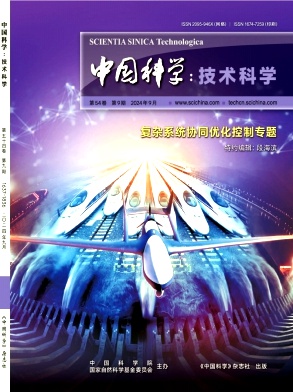
《中国科学: 技术科学》是中国科学院主管、中国科学院和国家自然科学基金委员会共同主办的自然科学类综合性学术刊物, 由《中国科学》杂志社出版,主要报道材料科学、机械工程、工程热物理、水利、空间科学、航空航天、土木工程、核科学与技术、电工、建筑、工程力学等领域基础研究和应用研究方面具重要意义的创新性成果.中英文不对照发表,中文被EI和国内核心收录,英文SCI和EI收录,月刊。
Title
Titles must be limited to no more than 20 words, and should be concise, indexable, and informative for a broad scientific audience. Authors should avoid using colons, questions, nonstandard abbreviations, etc., in titles.
Author(s) and Author affiliation
Author(s) : Authorship should be limited to those who have contributed substantially to the work.
The order of the authors listed should be agreed by all the coauthors, and every author should have the responsibility for the published content. The corresponding author must have obtained permission from all authors for the submission of each version of the paper and for any change in authorship.
Family names are written in upper case. The email address of the corresponding author is required.
Author affiliation : The affiliation should be the institution where the work was done. Complete addresses are required with post codes.
Abstract
An abstract is a summary of the content of the manuscript. It should briefly describe the research purpose, method, result and conclusion. The extremely professional terms, special signals, figures, tables, chemical structural formula, and equations should be avoided here, and citation of references is not allowed.
Keywords : A list of three to eight keywords should follow the abstract. The chosen keywords are required to reflect the theme of a manuscript.
Text
A paper should begin with a brief introduction of the significance of the author's research. Nomenclature, signal, and abbreviation should be defined at their initial appearance. All the figures and tables should be numbered in numerical order.
Introduction : Being the most important part of an article, the introduction introduces the relevant research background and the progress in 2 or 3 years, with references cited in numerical order, then presents the problem to be solved in this article, and finally briefly describes the method adopted in this work. Before the end, the aim of the research should be mentioned. Subtitle is forbidden in this part, and introduction of the article structure is considered unnecessary.
Materials and method : This part introduces the materials, method and experimental procedure of the author's work, so as to allow others to repeat the work published based on this clear description.
Discussion and conclusions : Conclusions should be derived from the observation and experimental results, and comparison with other relevant results is considered helpful to further proving the results. Repeated data should be avoided, and conclusions and suggestions are required to be clearly expressed. New hypotheses and recommendations may be proposed when warranted.
Figures and tables : Figures and tables should be numerically numbered, inserted in the text, and cited in order within the text. The figures should have resolution not lower than 600 dpi and clear lines of 5 px, with signals and letters in Times New Roman at 8 pt. A space should always be maintained between the variable and the unit.
Equations : An equation is numerically numbered (Arabic numeral), and has the number put on its right side.
Acknowledgements : The author expresses his/her thanks to the people helping with this work, and acknowledges the valuable suggestions from the peer reviewers.
Financial support : Financial support appears on the bottom of the title page, with grant number(s) following. The full title of each fund is required. For example: National Natural Science Foundation of China; National High-Tech Research & Development Program of China; National Basic Research Program of China.
References
References : Reference citation is regarded as an important indicator of the paper quality. If the relevant references, especially the results published in 2 to 3 years are not cited in the paper, or most citations are from the author's publications, the editor will consider this paper unattractive. References should be numerically numbered and cited in order within the text, with the numbers expressed in square brackets. The author should carefully check the author names, article title, journal title, year, volume and issue number of references, and create the listing according to the format of Sci China Tech Sci .
Reference format
1. For an author's name, full spelling of family name appears before abbreviation of given name, with a spacing in the middle.
2. If there are more than 3 authors, the first 3 names are followed by et al.
3. The article title should be identified by an initial capital letter with the remainder of the title in lower case.
4. For correct abbreviations of journal titles, refer to ISO, eg, Chin Sci Bull for Chinese Science Bulletin , Sci China Life Sci for Science China Life Sciences.
5. For books and proceedings, the initial letter is capitalized for all the notional words and for function words with more than 4 letters.
6. Do not forget to list the editor names of the proceedings, the publisher, the publishing address, and the beginning and terminating pages.
7. Accepted but unpublished papers should be followed by “in press”.
8. Websites or homepages cannot be cited as references.
Reference examples
References : Reference citation is regarded as an important indicator of the paper quality. If the relevant references, especially the results published in 2 to 3 years are not cited in the paper, or most citations are from the author's publications, the editor will consider this paper unattractive. References should be numerically numbered and cited in order within the text, with the numbers expressed in square brackets.
Reference examples are given as follows:
●Journal
Wang QH, Lindon O, Hardle W. Semiparametric regression analysis with missing response at random. J Amer Statist Assoc, 2004, 99: 334--345
●Monograph
Rordam M, Larsen F, Lausten N. An introduction to K-theory for C*-algebras. Cambridge: Cambridge Univ Press, 2000. 30—35
●Proceedings
Qin H R. The subgroups of a finite order in K(Q). In :Bass H, Kuku AO, Pedrini C, eds. Algebraic K-theory and Its Application. Singapore: World Scientific, 1999. 600—607
●Conference proceedings
Minor H E. Spillways for high velocities. In: Zurich VE, Minor HE, Hager WH, eds. Proceedings of International Workshop on Hydraulics of Stepped Spillways, Rotterdam, the Netherlands, 2000. 3--10
●Dissertation
Liu G X. Classification of finite dimensional basic Hopf algebras and related topics. Dissertation for the Doctoral Degree. Hangzhou: Hangzhou University, 2005. 24--28
●Technical report
Phillips N A. The Nested Grid Model. NOAA Technical Report NWS22. 1979
●Patent
Zhang W P. Experiment Apparatus of Diffraction Imaging. China Patent, 02290557.X, 2003-12-03
●User manual
Wang DL, Zhu J, Li ZK, et al. User Manual for QTKMapper Version 1.6, 1999
●Software
Hemodynamics III: The ups and downs of hemodynamics. Version 2.2. Orlando (FL): Computerized Educational Systems. 1993
●CD
Anderson SC, Poulsen K B. Anderson's Electronic Atlas of Hematology. Philadelphia: Lippincott Wilkins, 2002
●Electronic version of a journal
Christine M. Plant physiology: plant biology in the Genome Era [OL]. Science, 2003, 281: 331 -332 [2003-09-23]. http://www.sciencemag.org/anatmorp.htm
Conflict of Interest
Disclosure of potential conflict of interests
Authors must disclose all relationships or interests that could influence or bias the work. Although an author may not feel there are conflicts, disclosure of relationships and interests affords a more transparent process, leading to an accurate and objective assessment of the work. Awareness of real or perceived conflicts of interests is a perspective to which the readers are entitled and is not meant to imply that a financial relationship with an organization that sponsored the research or compensation for consultancy work is inappropriate. Examples of potential conflicts of interests that are directly or indirectly related to the research may include but are not limited to the following:
· Research grants from funding agencies (please give the research funder and the grant number)
· Honoraria for speaking at symposia
· Financial support for attending symposia
· Financial support for educational programs
· Employment or consultation
· Support from a project sponsor
· Position on advisory board or board of directors or other type of management relationships
· Multiple affiliations
· Financial relationships, for example equity ownership or investment interest
· Intellectual property rights (eg patents, copyrights and royalties from such rights)
· Holdings of spouse and/or children that may have financial interest in the work
In addition, interests that go beyond financial interests and compensation (non-financial interests) that may be important to readers should be disclosed. These may include but are not limited to personal relationships or competing interests directly or indirectly tied to this research, or professional interests or personal beliefs that may influence your research.
The corresponding author will include a summary statement in the text of the manuscript in a separate section before the reference list.
See below examples of disclosures:
Funding
This study was funded by X (grant number X).
Conflict of Interest
Author A has received research grants from Company A. Author B has received a speaker honorarium from Company X and owns stock
Figures
File Format: Please provide separate files in formats such as PNG, JPG/JPEG, TIFF, etc. (with a resolution of 500-600 dpi or higher). Vector graphics and formats such as PDF, PPT, etc. are not accepted. Images should not be inserted into Word documents, as this will significantly reduce clarity.
Plate Size: Single column width should be 8 cm, full column width should be 17 cm, and the height should be less than 20 cm. Try to avoid using light-colored pens for text and lines, such as yellow and light blue.
Each figure number should correspond to one graphic file. Unassembled separate figure files are not accepted. Sub-figure numbers like “abcd” must be written according to the journal's style requirements.
For font size, capitalization, italics, numeric values, units, etc., please refer to the format of articles already published in this journal and make the necessary modifications.
The manuscript should not be submitted to more than one journal for simultaneous consideration.
The manuscript should not have been published previously (in part or in full), unless the new work concerns an expansion of previous work (please be transparent on the re-use of any materials to avoid any doubt of text-recycling (“self-plagiarism”)).
A single study should not be split up into several parts to increase the quantity of submissions, then submitted to various journals or to one journal over time (eg “salami-publishing”).
No data should be fabricated or manipulated (including images) in order to support conclusions.
No data, text, or theories by others should be presented as if they were the authors' own (“plagiarism”). Proper acknowledgements to other works must be given (this includes any materials that are directly cited, summarized and/or paraphrased). Quotation marks are used for direct citation of materials, and permission must be secured for material that is copyrighted.
Important note: the journal may use software to screen for plagiarism.
All co-authors and responsible authorities where the work was carried out must give their consent to publish before the work is submitted.
Authors whose names appear on the submitted paper have contributed sufficiently to the work and therefore share collective responsibility and accountability for the results.
In addition:
Changes in authorship or in the order of the authors' names are not accepted once the manuscript has been accepted. Requests to add or delete authors at the revision stage or after publication is a serious matter and may be considered only after receiving written approval from all authors with a detailed explanation about the role/deletion of the new/deleted author. The decision to accept or decline the change rests with the Chief Editor of the journal.
Upon request, authors should be prepared to send relevant documentation or data to verify the validity of the results. This could be in the form of raw data, samples, records, etc.
If there is any suspicion of misconduct, our board will carry out an investigation following the COPE guidelines. If the allegation seems to raise valid concerns, the accused author will be contacted and given an opportunity to address the issue. If misconduct has been proven, it may result in the implementation of certain measures, for instance:
If the article is still under consideration, it may be rejected and returned to the author(s).
If the article has already been published online, depending on the nature and severity of the infraction, either an erratum will be placed with the article or, in severe cases, the article will be completely retracted. The reason must be given in the published erratum or retraction note.
The author(s)' institution may be informed for the misconduct.
Statement of Human and Animal Rights
When reporting studies that involve human participants, authors should include a statement confirming that the studies have been approved by the appropriate institutional and/or national research ethics committee and have been performed in accordance with the ethical standards laid down in the 1964 Declaration of Helsinki and its later amendments, or other comparable ethical standards.
If doubts exist about whether or not the research was conducted in accordance with the 1964 Helsinki Declaration or other comparable standards, the authors must explain the reasons for their approach, and demonstrate that a qualified ethics committee or institutional review board has explicitly approved of the doubtful aspects of the study.
The following statements should be included in the text before the References section:
Ethical approval: “All procedures performed in studies involving human participants were in accordance with the ethical standards of the institutional and/or national research committee and with the 1964 Helsinki declaration and its later amendments or comparable ethical standards.”
The welfare of animals used for research must be respected. When reporting experiments on animals, authors should indicate whether the institutional and/or national guidelines for the care and use of animals were followed.
马宗义机构:
中国科学院金属研究所
研究领域:
金属复合材料
王 刚机构:
上海大学
研究领域:
非晶合金
王树声机构:
西安建筑科技大学
研究领域:
城市规划
王晋军机构:
北京航空航天大学
研究领域:
流体力学
田永君机构:
燕山大学
研究领域:
超硬材料
冯 雪机构:
清华大学
研究领域:
固体力学
宁建国机构:
北京理工大学
研究领域:
工程力学
吕金虎机构:
北京航空航天大学
研究领域:
系统控制
吕海宝机构:
哈尔滨工业大学
研究领域:
特种环境复合材料
刘文广机构:
天津大学
研究领域:
生物医用高分子材料
刘汉龙机构:
重庆大学
研究领域:
土木工程
刘昌胜机构:
上海大学
研究领域:
生物材料
刘金国机构:
中国科学院沈阳自动化研究所
研究领域:
机器人与自动化装备
刘 静机构:
清华大学
研究领域:
传热学、生物医学热物理
李应红机构:
空军工程大学
研究领域:
航空宇航推进技术
李宏男机构:
大连理工大学
研究领域:
土木工程
李 强机构:
南京理工大学
研究领域:
工程热物理与能源利用
吴宜灿机构:
中子科学国际研究院
研究领域:
核科学与技术
冷劲松机构:
哈尔滨工业大学
研究领域:
智能材料和复合材料力学
宋晓艳机构:
北京工业大学
研究领域:
材料科学,计算材料学
张田忠机构:
上海大学
研究领域:
材料力学/固体力学
陈云敏机构:
浙江大学
研究领域:
岩石工程
陈 光机构:
南京理工大学
研究领域:
金属材料与加工
陈涌海机构:
中国科学院半导体研究所
研究领域:
半导体材料
周又和机构:
兰州大学
研究领域:
多场耦合非线性力学
周顺桂机构:
福建农林大学
研究领域:
有机固体废物资源利用
宝音贺西机构:
清华大学
研究领域:
航天器动力学与控制
宗秋刚机构:
北京大学
研究领域:
空间科学
赵天寿机构:
南方科技大学
研究领域:
工程热物理与能源科学
赵启斌机构:
RIKEN, Japan
研究领域:
Machine learning, Tensor Learning Theory and Application
柯燎亮机构:
天津大学
研究领域:
薄膜力学
段海滨机构:
北京航空航天大学
研究领域:
导航、制导与控制
姜培学机构:
清华大学
研究领域:
工程热物理
姜 潮机构:
湖南大学
研究领域:
汽车工程
姜 澜机构:
北京理工大学
研究领域:
机械工程,激光微纳制造
郭万林机构:
南京航空航天大学
研究领域:
飞行器结构安全与智能化
郭 旭机构:
大连理工大学
研究领域:
计算力学、纳米力学
席 光机构:
西安交通大学
研究领域:
动力工程与工程热物理
陶 智机构:
北京航空航天大学
研究领域:
航空发动机
黄永安机构:
华中科技大学
研究领域:
柔性电子器件与应用
黄晓旭机构:
重庆大学
研究领域:
金属材料
曹晋滨机构:
北京航空航天大学
研究领域:
空间环境探测技术
梁新刚机构:
清华大学
研究领域:
动力工程及工程热物理
彭练矛机构:
北京大学
研究领域:
碳基电子学
舒 昌机构:
National University of Singapore, Singapore
研究领域:
流体力学
童美萍机构:
北京大学
研究领域:
水沙物质通量分析
翟婉明机构:
西南交通大学
研究领域:
铁路工程
潘 兵机构:
北京航空航天大学
研究领域:
固体力学、光测力学
薛冬峰机构:
中国科学院深圳先进技术研究院
研究领域:
无机化学
魏悦广机构:
北京大学
研究领域:
力学
QQ:1211130760
微信:iqkan555
 微信扫码加好友
 QQ扫码加好友